Surely many of you are in the same boat.

Out of the eight of us in the house, we've learned that one child can't have wheat.  She's so sensitive that eating one 1/4" piece of bread caused her arms to turn hot pink and start to weep.  But the rest of us are fine.  We're still in the process of determining if she reacts to gluten, or to just the wheat itself, so for now everything must be wheat-free AND gluten-free.  And dairy-free, while we're figuring out if that's an issue too.  For some strange reason, I prefer to cook only one meal, per meal.  And special 'gluten-free' foods are pricey.  Really pricey.  So I'll let you know how I've adapted.  Hopefully it'll help you or someone else having to adapt to whatever allergy or special needs diet strikes just one or two in your family.  


Eight Tips for feeling (more) normal when someone has special dietary needs

1- Plan on preparing most of your family's foods.  
Unless you have nothing against quadrupling your family's food budget.  Not kidding.   If you didn't cook much before, brush up on the basics.  They'll do for now.  And for a while.

2- Eat naturally wheat-free foods
Keep a list around so you can focus on what CAN be eaten rather than all the CAN'Ts.  It's empowering and encouraging.  While you're still getting used to what's okay and not, go through your kitchen and pantry, and write down everything that is GF already, including all plain spices and herbs (blends might not be; check), canned/fresh/frozen fruits and vegetables, rice, plain beans, flax, buckwheat, meat in its natural state, eggs, peanut butter, olives, potato chips, popcorn, jam, ketchup...  See a bigger list here, halfway down the page.  There's a GF year-supply list here.  You know, I've been telling myself for years that we oughta eat more rice and beans.  They're cheap, store well, and are filling. 
Those have suddenly become more popular at my house.

3- Make a list of 10-15 meals your family likes that are gluten/wheat-free and can be made using what you typically have on hand.  Include both super-quick meals and more involved ones.  Be willing to spend about an hour doing this; it'll save you much more time than that in the long run.  Get input from your kids.  Tape the list someplace handy like the inside of your cooking supplies cupboard.  No more panic or feeling helpless at a change of dinner plans!

4- When you cook some specialty gluten-free food, go ahead and make a big batch.  Then freeze the rest in individual serving sizes.  For my 10-year-old, the ziptop "snack size" baggies are the perfect size.  There's a gallon-sized ziptop bag labeled for her in the freezer. What's in it changes often.  Right now it has GF waffles and breadsticks, spaghetti (made with specialty GF pasta) and sauce, seasoned rice, dairy-free homemade ice cream (made in my blender), and GF chocolate chip cookies.  Remember treats. They've saved my daughter from feeling deprived with all these new "don't"s.  Whenever my husband pulls out the ice cream, she pulls out her freezer bag and gets something sweet too.  I also keep one loaf of GF bread in the freezer, for sandwiches and toast.  She pulls out a couple slices whenever needed.

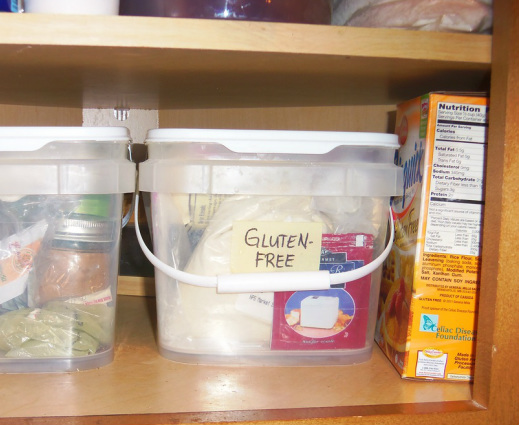
5- Keep a small plastic bin full of GF baking supplies, like the photo above. It's handy for all kinds of things. My 'essentials' include a bag of GF flour mix (homemade or storebought), xantham gum, some white flour like rice, tapioca, or potato starch, and a whole-grain GF flour like brown rice, lentil, oat, or sorghum.  Mine also has a bag of dairy-free chocolate chips in it, good for a lot more than just cookies.  I've found flours like tapioca, potato starch, and rice flour at the Asian market for a fraction of the price.

6- Try a new GF recipe at least once a week.  And maybe only once a week, depending on how overwhelming it is to you.  Have that other family member cook with you, so she'll learn to cook for herself later.  If you love bread, stick with the quickbreads for a while.  They're much simpler.  I think the easiest way to learn, other than just trying a new GF mix each week, is to buy a copy of of Living Without magazine.  Or sign up for their free weekly newsletter, which includes a recipe.   I love the magazine format because you can learn in 5-minute increments.

7- Remember to watch out for cross-contamination
I think this is actually the hardest one.  You might want to have TWO jars of mayonnaise and jam open, one of each labeled as GF.  Otherwise it's really easy for bread crumbs from one person to end up in the jar, where they'll cause the allergic person grief.  Remember that toasters carry crumbs.  Wipe the counters really well.  Consider having a second set of measuring cups, possibly mixing bowls and cooling racks too, depending on severity of reaction.  If you have a regular wheat grinder you can grind your own GF flours, using things like rice, beans, oats, lentils, quinoa, etc, BUT only use a mill that has not been used for wheat.  Unless you want to invite problems.  Some things can be ground in a blender, like oats, if those are OK for your family member.

And,
8- Read labels.  Always.  Always.
Learn which ingredients have hidden gluten.  You'll be surprised at what you find.  Sometimes good surprises.  Sometimes lame ones.  Realize too that sometimes companies change their ingredients, and something that didn't have gluten/wheat in it before, might the next time you buy it.  Knowing exactly what you're eating is a good idea anyway.


You can do this!  :D

Love, Rhonda
 
 
Start with regular bread dough- and turn it into a treat!

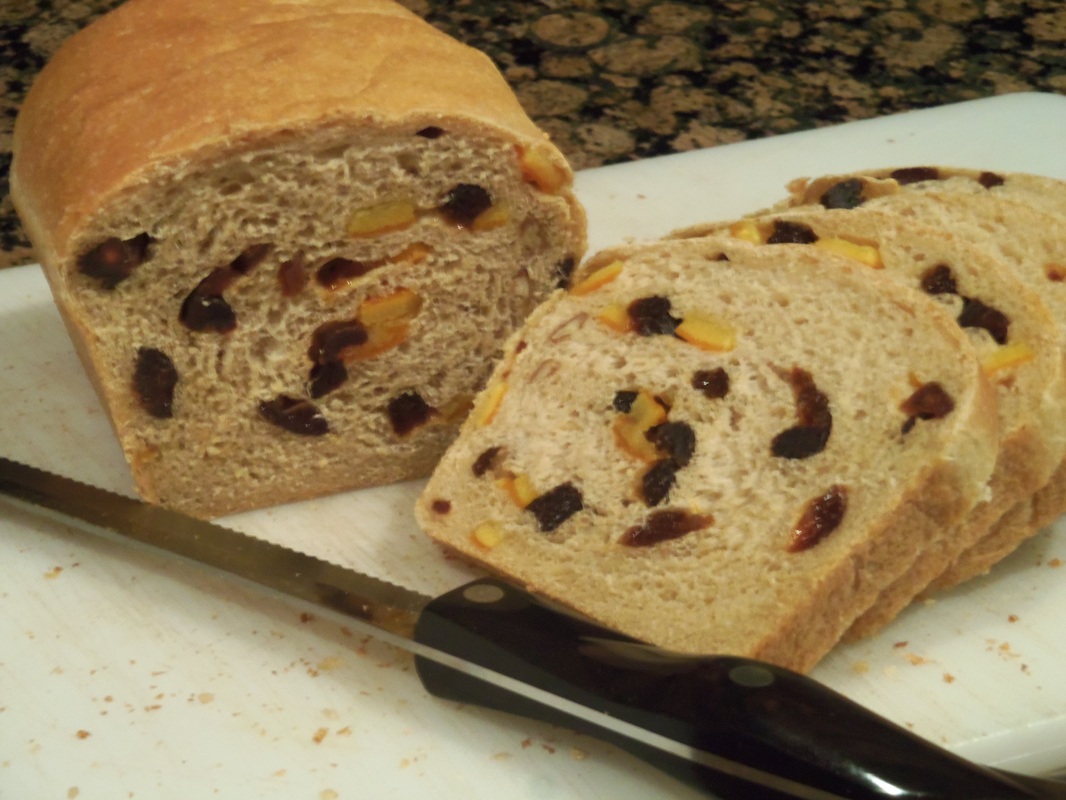
I love the flavor combination here- the bright flavor of candied orange peel, the sweet-tartness of snipped dried apricots, and the hearty depth from pecans. This bread is at its best after a day so the orange has a chance to permeate the whole loafwhen toasted: great with butter, but heavenly with cream cheese.  Yum.  I like it for breakfast.

This batch was made using 100% whole wheat dough, but use whatever you're making anyway.

Mix up a batch of dough (like this one).  Set aside one loaf's worth of dough.  Stretch or roll it to about 8x16 inches.  Sprinkle evenly with 1/3 cup diced candied orange peel, 1/3 cup (2 oz) dried apricots, snipped, and 1/3 c. pecan pieces.  Roll up starting with the narrow end.  Place in a greased 8x4 loaf pan, seam side down.  Let rise and bake as usual, adding 1-2 extra minutes to the baking time.  Cool and slice.


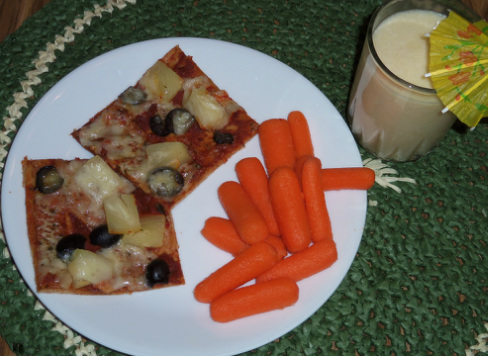
Between helping a sick 7-year-old catch up on homework, driving the carpool today, running kids to appointments, and half of them needing to be at their church youth activities an hour later, I needed an easy and quick dinner tonight.  I had a batch of bread dough rising, so I heated the oven to 450 F, took a loaf's worth of dough, rolled it out to fit a greased cookie sheet, and baked it for ten minutes.  While it cooked, I pulled out shredded cheese, opened a can of olives and one of pineapple, and stirred together some red sauce: 1/3 c. tomato powder, 2/3 c. hot water, and 1/4 tsp. salt (or use one 8-oz can of tomato sauce), then spices to taste: a few good shakes of oregano, basil, black pepper, onion powder, a pinch of fennel... whatever you have and smells good with it. 
Spread the sauce on the hot pizza crust, sprinkle on the toppings, then put under the broiler for two minutes, until bubbling.  If you want a few more mixing/cooking details, see this other post.

Since I'd only used part of the can of pineapple and also had some coconut milk in the fridge, I made Pina Colada:   

1 (20 oz.) can of pineapple (or almost a can, in this case)
1/2 cup coconut milk (or use 2-3 Tbsp. shredded coconut and 1/3 c. water)
Half a tray of ice cubes or one handful
1 Tbsp. mild molasses
1 drop lime essential oil or 1/4 tsp. lime zest (optional but adds just the right touch)

Combine in a blender; turn on high until smooth.  Add a little sugar or honey if it's not sweet enough.

I didn't use any more sugar; the lime boosted the flavor enough that the drink didn't really need anything else.

To the pizza and drink, add a salad or other vegetable, and there's supper!


About six years ago I discovered my boys had a vocabulary problem.  They were using one word to describe everything that tasted good: 'heavenly'.
This bothered me for two reasons-  one, I'm sure heaven is much better than the best food, and two, they weren't expanding their vocabulary.  This was a perfect time.  So we pulled out a thesaurus and looked up 'delicious' to come up with a new word to use.  'Toothsome' had them rolling on the floor laughing, so that became the new favorite.  
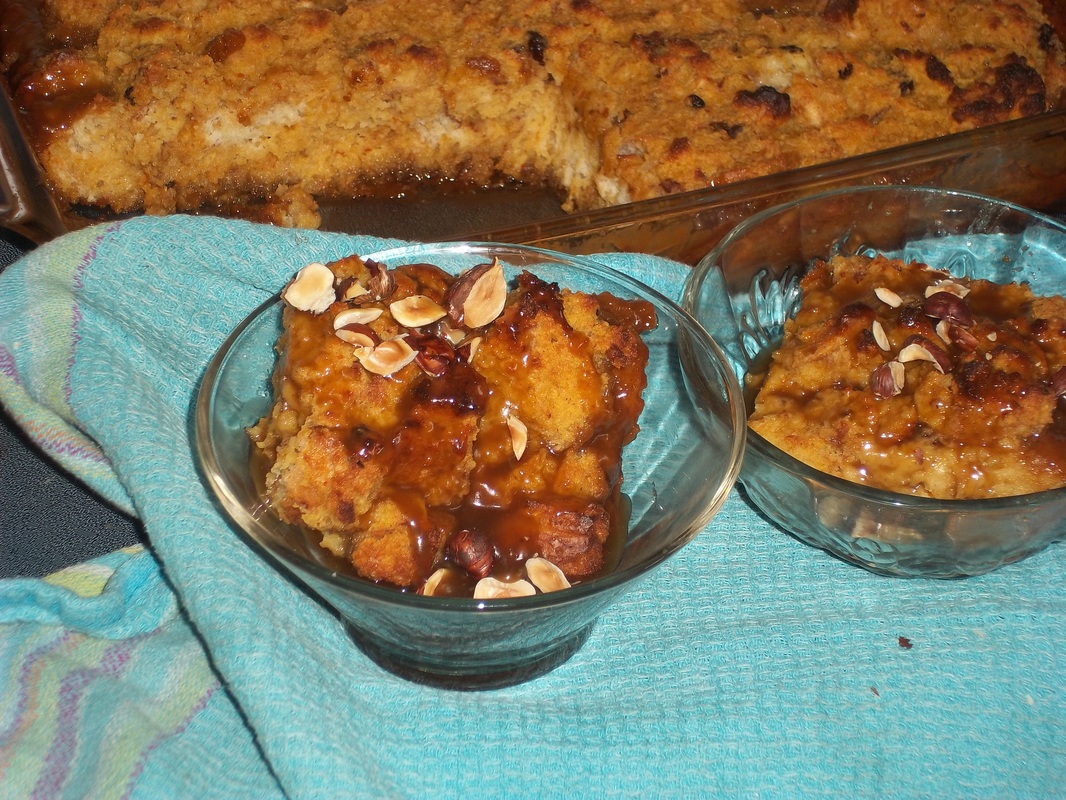
I've discouraged them using 'heavenly' very often- but I'll tell you, that was the first word that popped into my head (I didn't say it!) when the first spoonful of moist, custardy, caramel-y, pumpkin dessert hit my tastebuds.  

My apologies to Heaven.
  

This is a modified version of Caramel Bread Pudding.  (The link has other ways of using up stale bread, too.)  The spices in this play a supporting role to the pumpkin flavor: just enough there to help you notice the pumpkin, not the spice.  If you want to taste the cinnamon, double or triple the amount here.

Caramel Pumpkin Bread Pudding- fills a 9x13 pan

15 slices good-quality white bread, cut into 1” pieces (about 16 cups or 20-24 ounces)- baked until crisp (about 10 minutes at 450 degrees)
1 ½ sticks butter
2 cups light brown sugar
1 cup heavy cream or evaporated milk
¼ c. honey or corn syrup  
5 tsp. vanilla, divided
2 1/2 c. half-and-half, or use the last ½ cup evaporated milk from your can (above); use whole milk for the remaining 2 cups here.   
5 large eggs
1 c. pumpkin puree
1/2 tsp. cinnamon  OR 2 tiny drops cinnamon essential oil
1/4 tsp. ground cloves OR 1 tiny drop clove essential oil
1/2 c. toasted nuts, optional

Melt butter and sugar together in a saucepan on medium-high heat.  Stir about 4 minutes, or until bubbly and golden.  Remove from heat and stir in cream or evaporated milk, corn syrup, and 2 tsp. vanilla.  Pour one cup of this caramel into a greased 9x13 pan.  

Set aside one more cup of caramel, to use as topping later.  

To the remaining caramel, add the half-and-half (or mixture of evaporated milk and whole milk).  Beat the eggs together, then whisk in pumpkin, cinnamon, and cloves.  Whisk in the half-and-half mixture.  Add remaining vanilla.  Fold in the bread, and let sit until soaked through, about 20 minutes. Meanwhile, heat oven to 350 degrees. Put bread mixture into the 9x13 pan, bake about 40-45 minutes, until the top is crisp and the custard is barely set.  Sprinkle with toasted nuts.  Serve warm, with the reserved cup of caramel drizzled on top.
 
 
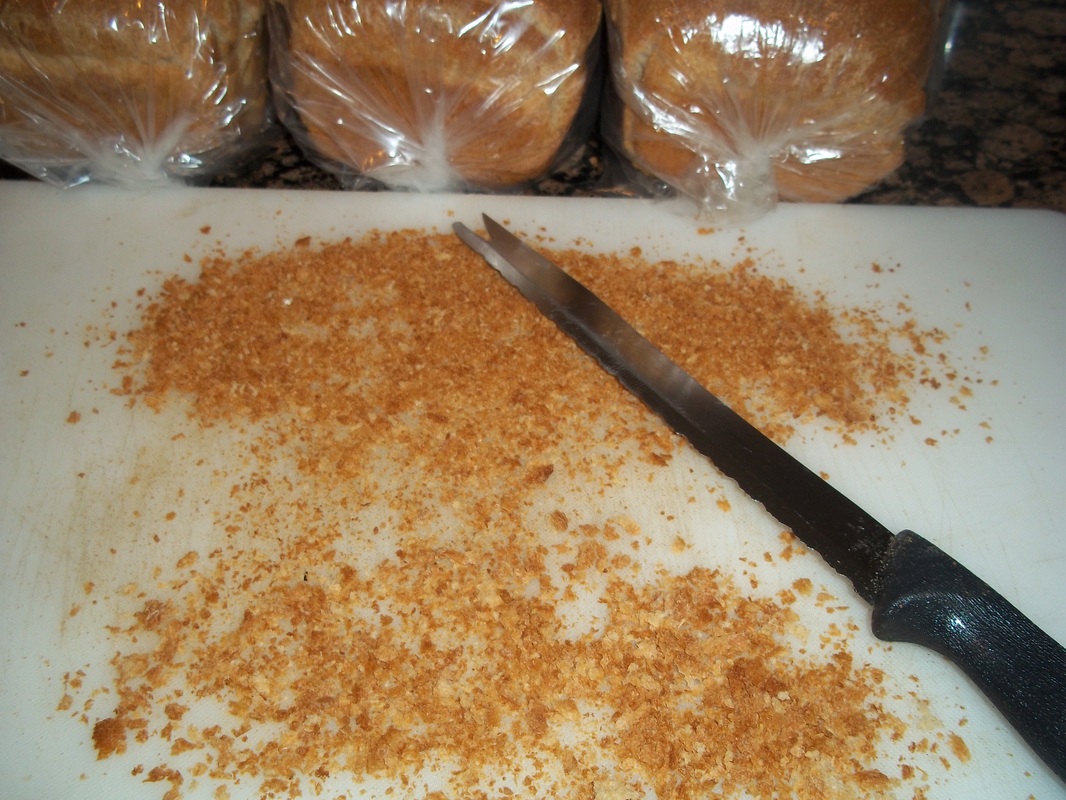
If you're making homemade bread, you're bound to have a few crumbs.  Most of the crumbs come from slicing the bread, but there are always a few in the bottom of the empty bread bags, too.

It's common to just shake them into the sink or the garbage, but is there anything else!

Oh, yeah.

Since they're already dry, they don't spoil if kept fairly airtight.  I scoop them into a plastic container with a lid and save up until there's enough to do something with them.

Add to hamburger to extend it a bit
Use in  Meatballs
or Zucchini Cakes
coating for Chicken Nuggets

You can even use them as a substitute for oats or flour in recipes- 
1/2 c. crumbs = 1/2 c. rolled oats, 
1/2 c. crumbs = 1/4 c. flour

Or use them in place of graham cracker crumbs for a pie crust.  See below.

Crumb Crusts
1 ½ c. graham cracker crumbs 
¼ c. sugar 
5-6 Tbsp. melted butter 

Stir together crumbs and sugar, mix in butter. Press firmly and evenly in a 9” pie pan. Chill 1 hour OR bake at 375 degrees 6-9 minutes, til edges are brown (and it smells wonderful).  
Use a blender to crush the cookies/crackers, or a cereal box liner or big zip top baggie and a rolling pin
Breadcrumb crust:use dry breadcrumbs, increase sugar to 1/3 c. You’d never know!
Chocolate Crust: use 1 ½ c. crushed chocolate cookies (take out creme filling), don’t use the sugar in the crust recipe.
Gingersnap Crust: use all gingersnap crumbs or part gingersnap, part graham. Leave out sugar.
Nut crust: add 1/3 c. finely chopped pecans, almonds, walnuts, or other to any crumb crust.
Vanilla Crust: use crushed vanilla wafers, leave out the added sugar.

 
Try it!  (Now, won't you feel thrifty?)
 
 
Yeah, I know that smoked salmon is a little expensive for a website with a name like this one has...  

Would it help you feel better to tell you I buy it during the after-Christmas "food gift" clearance sales?   It's at least 50% off then.  
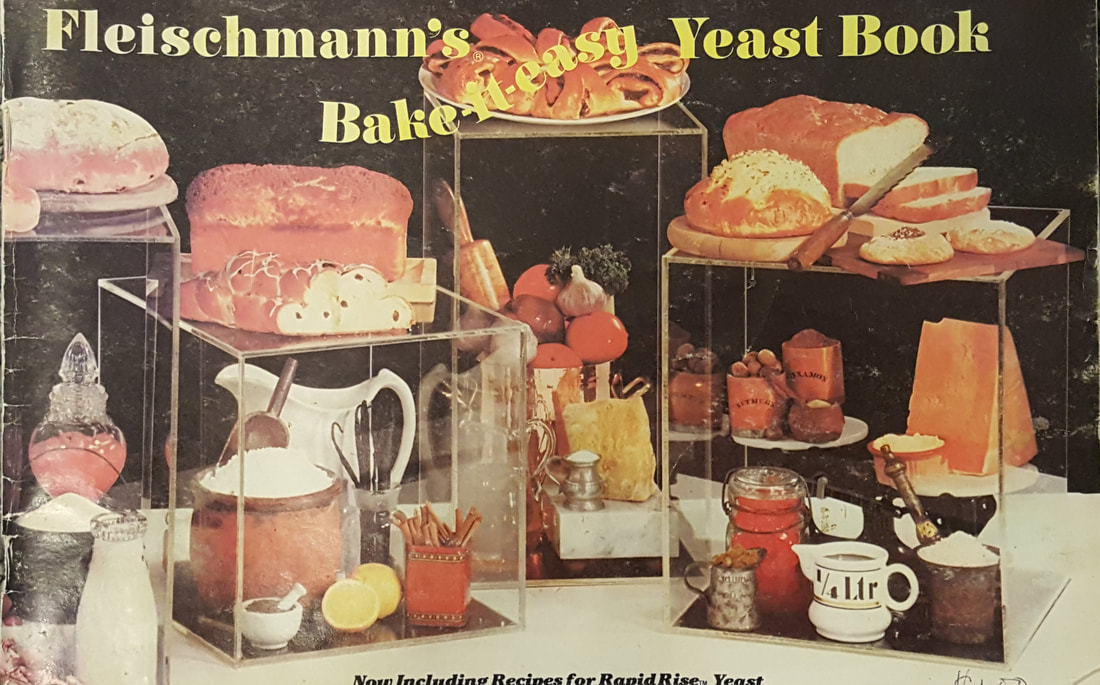
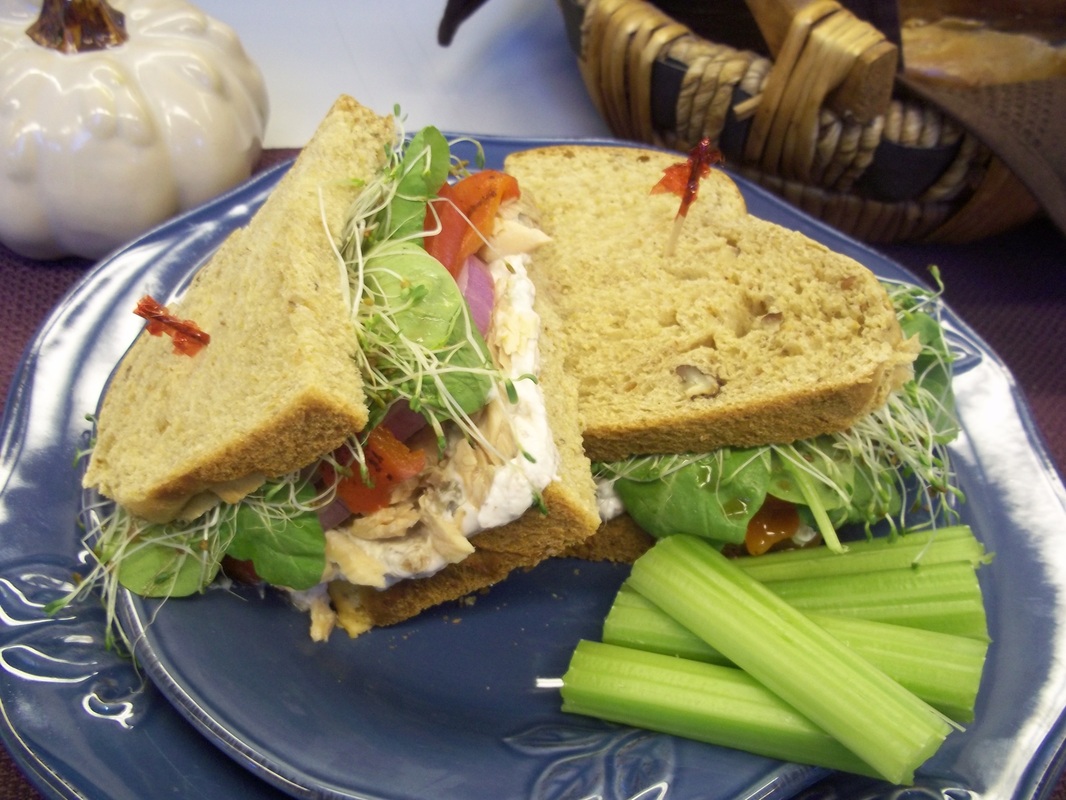
OK, it's still not real frugal.  But it does have an incredible shelf life-- and is one of my absolute-favorite foods!- which is why I had a couple tins of it on hand when the idea for this sandwich struck.  I decided, the day of the contest, to enter the "Fleishman’s Yeast Sandwich Bread Contest 2012" at the Utah State Fair.  Which bread I wanted to make was no problem, the Autumn Harvest Bread came right to mind.  The contest this year, though, specified for 10% of your overall judging score to be from the filling (or "description of a filling").  This is what I came up with to complement the breads' flavors.    It will make your tastebuds "dance and sing"!  The judges agreed, this took first place in the contest.

Autumn Harvest Smoked Salmon sandwiches

Start with one loaf of Autumn Harvest Bread, sliced about 1/2" thick.

* * * * * * * * * * * *

Cream Cheese Filling:
4 ounces cream cheese, softened 
2 Tbsp. very finely chopped (or pureed) red onion
2 Tbsp. minced crystallized ginger
2 Tbsp. finely chopped toasted pecans
¼ c. finely chopped celery
2 tsp. fresh lemon juice
1 ½ tsp. finely grated lemon zest
1/16 tsp. freshly ground black pepper

Stir together, chill at least 30 minutes to blend flavors. 

To assemble  sandwiches, spread about 2 Tbsp Filling on each of four slices of bread. Top with 2 ounces smoked salmon, and any of the following you like (I used all of them): thinly sliced red onion, sliced tomato, roasted red pepper, alfalfa sprouts, and arugula.  Drizzle with red wine vinegar and sprinkle with salt and pepper.  Makes 4 sandwiches.


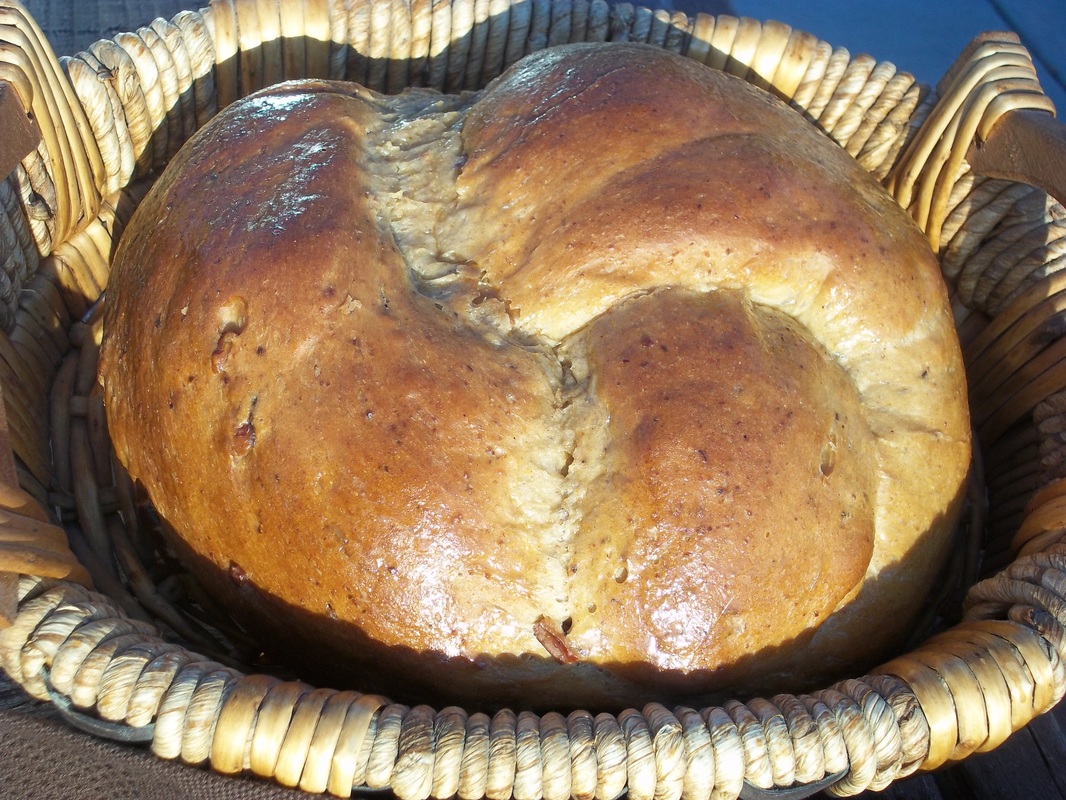
 This bread has a thin, chewy crust with an exceptionally tender and moist interior, flavored with pumpkin and honey, scented with cinnamon, ginger, cloves,  with a toasty crunch from pecans.  (See a photo of the inside here.) It is one of my all-time favorite recipes.  It all started with an artisan bread cookbook, Amy's Bread.

My brother had just finished a two-year mission to Spain, and came back with a whole new perspective on bread.  He described how fresh, hearty, deeply flavored, and moist those European breads were, with their beautiful, flavorful crusts.  

That's it, I thought, I MUST learn to make bread like that.  

So I bought a book.  (I still have, it, use it, and love it.  Her Country Sourdough loaf is perfect, and the thin, crunchy, seeded breadsticks are addicting!)

The recipe below began as one from her cookbook.  I've tweaked it over the years, until it can be claimed as my own.  We usually just slice and butter it, or toast and spread with cream cheese.  It would make incredible French Toast, especially if you stuff it with lightly sweetened cream cheese and top with fruit syrup or homemade maple-flavored syrup.   For a sandwich filling that goes spectacularly well with it, see my next post!

See here for a post on making pumpkin puree, or see this one on making pumpkin powder.  I actually used the pumpkin powder & added water in my batch for the fair.

Autumn Harvest Bread
(Pumpkin-Pecan Yeast Bread)

1 Tbsp. Instant or RapidRise yeast               4 ½ c. bread flour
1/2 c. warm water                                           ½ c. butter, melted
½ c. (6 oz.) honey                                            1 tsp. cinnamon
1 c. pumpkin puree                                          ½ tsp. ginger
1/4 c. cornmeal                                                ½ tsp. ground cloves
2 large egg yolks                                             1 ½ tsp. salt
2 Tbsp. dry milk powder                                 1 c. pecan pieces, toasted                                                                                

Combine yeast and warm water, stir to dissolve.  Let stand 3 minutes.  Mix in honey, pumpkin, cornmeal, egg yolks, milk powder, and 2 cups of the flour. Add butter, then the remaining 2 cups flour, the cinnamon, ginger, cloves, and salt.  Knead until smooth and elastic, about 5-10 minutes.  Let rest 20 minutes.  Knead in pecans.   Cover and let rise until doubled, about 1 ½ -2 hours.  

While it’s rising, make a wash with 1/4  c. cold water and 1/2  tsp. cornstarch:

Combine the two, bring to a boil, and stir until thickened.  Cover it so it doesn’t form a skin, and let it cool.

Divide dough into two pieces. Shape into 16-20” long logs, and tie each into a knot.  (Or shape into a ball, seam-side down, or shape into two 8x4 loaves.)  Cover and let rise until nearly doubled, 1-1 ½ hours.  Using a pastry brush, gently coat each loaf with the glaze.  Bake at 375 degrees for 25-35 minutes, until golden brown and the surface is firm.  Brush again with the glaze.  This helps it have a nice shine and a thin, soft crust.  Cool before cutting into 1/2" slices. 
 
 
This makes for a very special breakfast, one of my husband's very favorites.  It's fun to serve these when I have overnight guests, or sometimes just to surprise my family. 
I love the flavor of fresh-ground wheat, so I usually make these using 1 cup whole wheat flour and 1 cup all-purpose flour.
If you prefer a fruit filling, use 1-2 Tbsp. jam, jelly, or pie filling instead of (or in addition to!) the cream cheese.
You'll need to plan ahead- mix these up in the evening (10 minutes), stick the dough in the fridge overnight, then shape, quick-rise, and bake in the morning (45-60 minutes). 

Easy Danish Pastry
Makes 1 dozen

1 Tbsp. or 1 pkg. instant yeast
½ c. warm water (110-120 degrees F)
2 c. flour
3 Tbsp. sugar
¼ tsp. salt
½ cup (1 stick) butter, softened
½ c. milk, buttermilk, or kefir
1 egg yolk

Cream Cheese Filling
8 oz. cream cheese
2 Tbsp. sugar or 1 Tbsp. honey
½ tsp. vanilla

Glaze
1 c. powdered sugar
1-2 Tbsp. milk

Combine yeast and warm water, let sit 5 minutes.  Meanwhile, combine the flour, sugar, and salt in a large bowl.  Mix the butter in, mashing as needed!  Beat the egg yolk with the milk, then add them to the dry mixture.  Pour the yeast mixture on top.  Mix well.  Cover and refrigerate dough at least 3 hours, but not more than 24.

Combine the ingredients for the filling- stir cream cheese, sugar, and vanilla until smooth.

Divide dough into two logs about 8” long; keep one  in the fridge to stay cold.  Sprinkle counter with flour, then put one of the logs on the flour.  Sprinkle it with flour, as well.  Roll to a rectangle about 8x14”, then cut into 6 strips, each 14” long.   Roll each strip into a rope, then shape into a coil on a greased baking sheet.   Put about 1 ½ Tbsp. of the cream cheese filling on the center of each coil.  Turn the oven on to 350 F.   Cover the rolls and let rise while the oven heats and you roll out the next half.    After the rolls have risen for about 20 minutes, bake for 15-20 minutes or until set and golden brown on the bottoms.  Mix together powdered sugar and milk for glaze, then drizzle over rolls. 

Leftover pastries can be frozen on the baking sheet, then transferred to ziptop baggies for longer storage.  Best frozen within 3 months (but OK after that).


Picture
publicdomainpictures.net
Just about everyone seems to know about potato bread, or potato rolls, and how moist and tender they are.  There was even a while when mashed potatoes were added to raised doughnut dough (which is essentially the same as roll dough anyway); the finished product ones were called "Spudnuts".  Potatoes aren't your only option here, but here's how to use them:

Adding about 1/2 cup of mashed potatoes for every 3 cups of flour in the recipe seems to be about as high as you'd want to go.  Potatoes don't have gluten, so adding too much would result in a dense, heavy bread.  I like to reduce the water in the recipe by about 1/4 cup for each 1/2 cup of mashed potatoes, since they have a lot of water in them.  You can use the basic bread recipe for this, or any other one you like.  If you don't have mashed potatoes, add potato flakes in place of some of the flour.  Even using the water you cooked potatoes in, as the liquid in your bread, will help with moistness.

You can make a 'fully loaded' potato bread by adding some sour cream (reduce your water again!), bacon pieces, cheese, chives, or whatever else.  See TheFreshLoaf for one version of this.  Just remember- adding high-water ingredients- like the mashed potatoes, or sour cream- will require you to either reduce your water, OR add more flour.  Adding mix-ins, like the bacon, cheese, chives, etc, doesn't affect the dough.  However, it's easier to knead the bread without them, so add them last.

Now- for more options-

Use other purees!  Use up to the same ratio as above, for the same reason.  This will work best if the purees are warm, to help the dough's yeast grow.  110-120 degrees F is ideal.

-Mashed pumpkin- plain (which you won't taste), or with some cinnamon and pecans added!
-Mashed sweet potato
-Pureed fruit - good for using up overripe things, or old bottled fruit that's turning darker (as long as the jar's still sealed).  You might want to reduce the sugar in the recipe; too much actually slows down (but doesn't kill) the yeast.
-Pureed vegetables- I've used green beans (up to 1-2 cups puree in the 6-loaf batch), pureed corn, chiles, olives, carrots, etc.  Unless you want that particulat flavor, though, its best to avoid the cabbage/broccoli/cauliflower family.   Just remember to reduce salt if you're using salted veggies, reduce by 1/4 tsp. for each cup of puree.
-Mashed cooked beans or other legumes.
-Cooked hot cereal- this includes leftover breakfast oatmeal, cooked 7-grain cereal, Cream of Wheat, cooked millet or amaranth, or whatever you happen to have.  I've even added an abandoned, soggy bowl of cold cereal before.


This is a good way to use up little bits of (clean) leftovers- imagine the flavors of bread you can create!  Just keep in mind that if you add something that has meat in it, you'll need to refrigerate the finished bread.


What things have you added to bread?
 
 
Picture
Do you know the difference between baking soda and baking powder?  

How long have they been around?


Baking soda, sodium bicarbonate is an alkaline powder; when it is mixed with acidic ingredients, the two react and form carbon dioxide bubbles.  The bubbles lift and lighten batter as it bakes; baking must be done right away, before the bubbles dissipate and you lose its leavening power.  Common acidic ingredients include vinegar, buttermilk, sour cream, lemon juice, cream of tartar, brown sugar, and honey.  Baking soda also helps foods brown better, since moderate alkalinity, along with heat,  is a catalyst for the Maillard Reaction (the reason, other than caramelization, that cooked foods turn brown).

Baking powder is a combination of alkaline, acid (cream of tartar), and starch.  You don't need to use acidic ingredients in recipes using just baking powder, since the balance is already there.  Most baking powders are made with two different alkaline powders- one that reacts right away (baking soda), and one that reacts only with heat.  This way you can save some of that leavening power for when the food is actually IN the oven.  The starch is there to help absorb moisture so the powders don't react in the can and to help the powder stay free-flowing.

To use baking soda instead of baking powder, use 1/3 the amount, and make sure there's something acidic in the batter.  For instance, if your recipe calls for 1 Tbsp (which is 3 tsp.) baking powder, you can use 1 tsp. baking soda, and use buttermilk- or sour milk-  instead of regular milk.  Or mix in 1 tsp. cream of tartar.  Or use brown sugar instead of white.  

This works in reverse, too: if your biscuit recipe calls for buttermilk and you only have plain milk, use it but switch that 1 tsp. baking soda for 1 Tbsp. baking powder (or whatever it calls for, keeping that 1:3 ratio).

As far as I can find, baking powder wasn't invented until the 1800's, but leavening powders have been around at least for centuries.  Some of the earlier ones include:

Baker's Ammonia (ammonium carbonate, "hartshorn"; NOT cleaning ammonia!- which is poisonous)- made from powdered reindeer horn.  (Seriously.)  This one actually has characteristics more of baking powder, substitutes 1:1 for it, and makes cookies especially crisp and light.

Potash or pearl ash (potassium carbonate, an alkaline salt)- made by adding water to  the ashes of 'vegetables' or weeds, steeping overnight, then evaporating all the water by boiling.  The fine 'ash' left is used as baking soda.  There's a fascinating article on the process in the 1802 "Domestic Encyclopedia"

Saleratus, or soda ash (sodium carbonate, an alkaline salt)- also known as washing soda... sometimes used also in the boiling water step of making bagels, as it helps them brown better (Maillard reaction!!!).  An interesting bit of chemistry with this one is that when you heat  sodium bicarbonate (baking soda) by itself above about 160 F, you end up with sodium carbonate (washing soda), with byproducts of carbon dioxide and water (which dissipate into the air).  2NaHCO3(sodium bicarbonate) → Na2CO3(sodium carbonate)+ H2O + CO2  (It works fastest at 400 F.)

Baking soda's first large-scale appearance was in 1846, when a factory was built to make this new product, created by doing the opposite of the formula above- dissolving sodium carbonate in water, then pumping in carbon dioxide.  (There's a more efficient method now.)

  Can you believe we've had this useful leavener less than 200 years, and baking powder less than 150?     Boy, are we spoiled in the kitchen nowadays...


Read more:
http://www.foodsubs.com/Leaven.html
http://en.wikipedia.org/wiki/Saleratus
http://en.wikipedia.org/wiki/Washing_soda
http://chestofbooks.com/reference/The-Domestic-Encyclopaedia-Vol3/Pearl-Ash.html