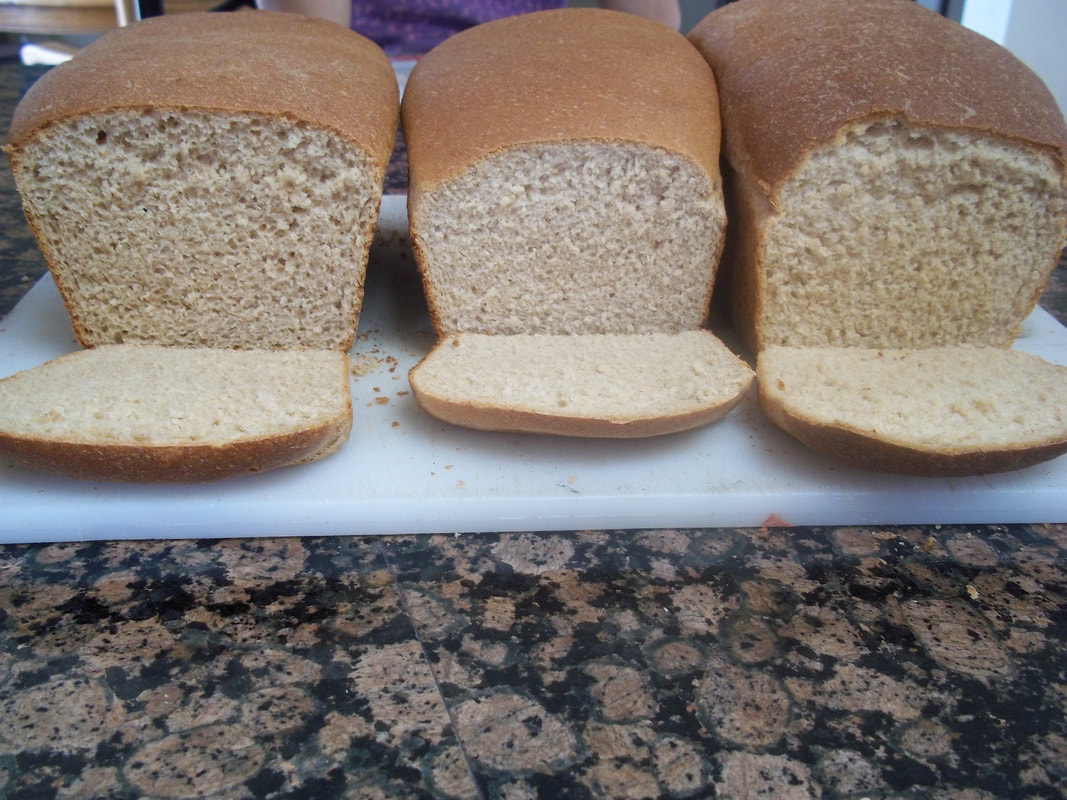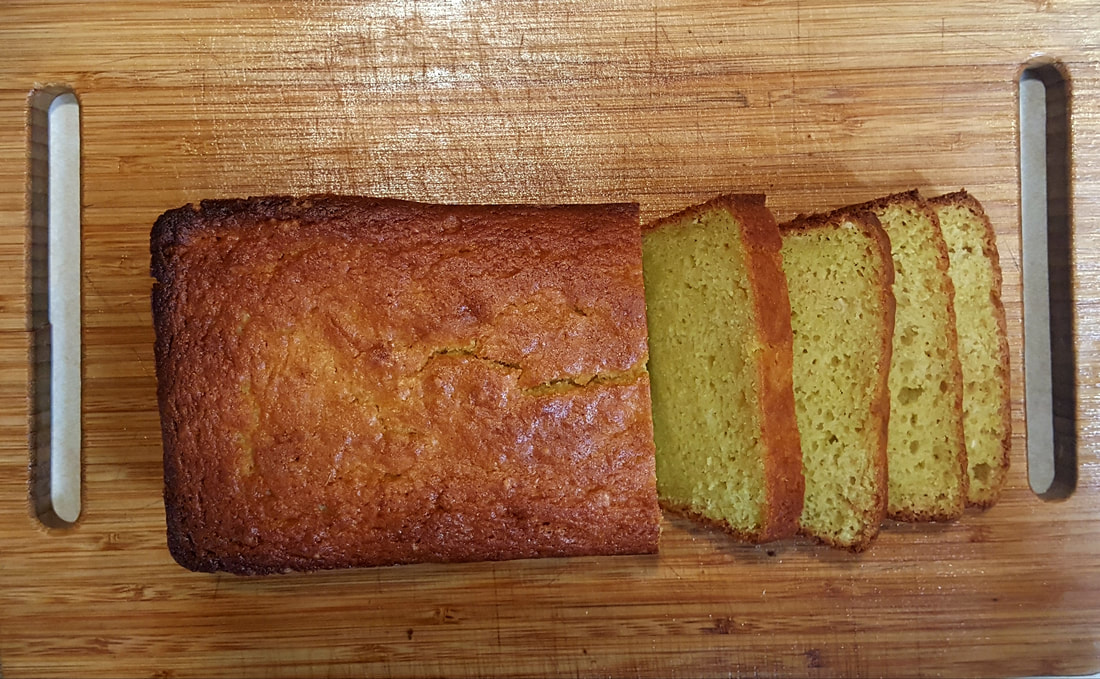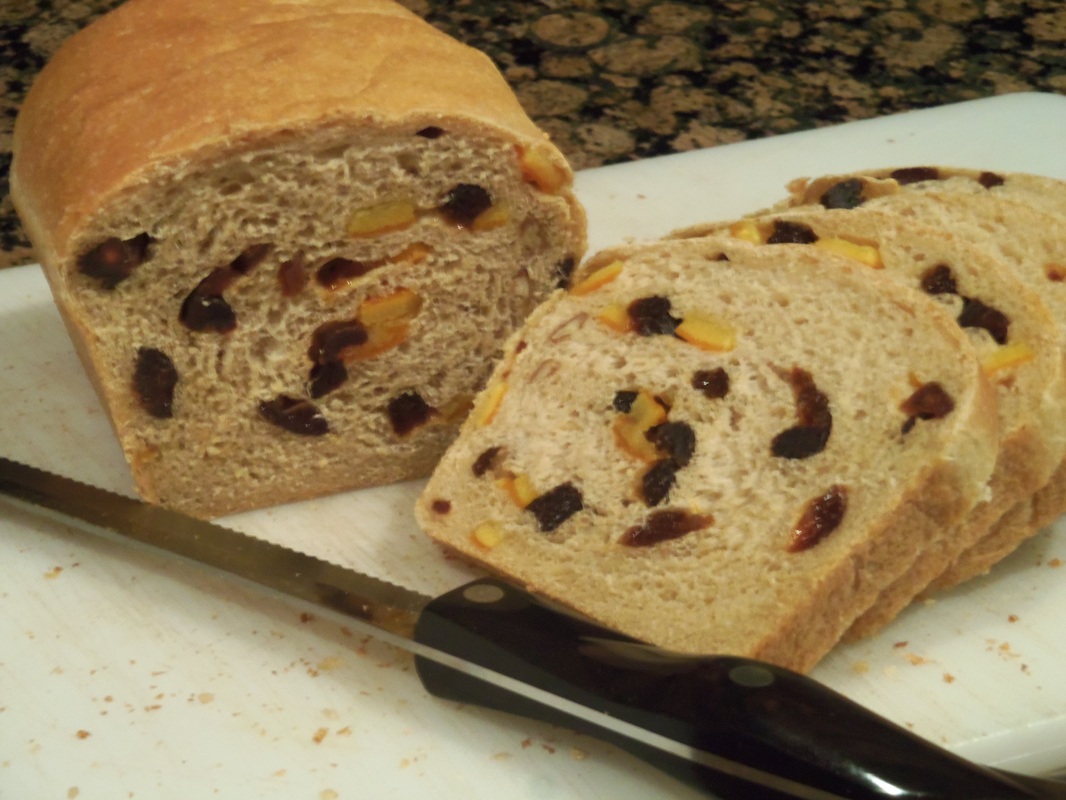
Start with regular bread dough- and turn it into a treat! I love the flavor combination here- the bright flavor of candied orange peel, the sweet-tartness of snipped dried apricots, and the hearty depth from pecans. This bread is at its best after a day so the orange has a chance to permeate the whole loafwhen toasted: great with butter, but heavenly with cream cheese. Yum. I like it for breakfast. This batch was made using 100% whole wheat dough, but use whatever you're making anyway. Mix up a batch of dough (like this one). Set aside one loaf's worth of dough. Stretch or roll it to about 8x16 inches. Sprinkle evenly with 1/3 cup diced candied orange peel, 1/3 cup (2 oz) dried apricots, snipped, and 1/3 c. pecan pieces. Roll up starting with the narrow end. Place in a greased 8x4 loaf pan, seam side down. Let rise and bake as usual, adding 1-2 extra minutes to the baking time. Cool and slice.
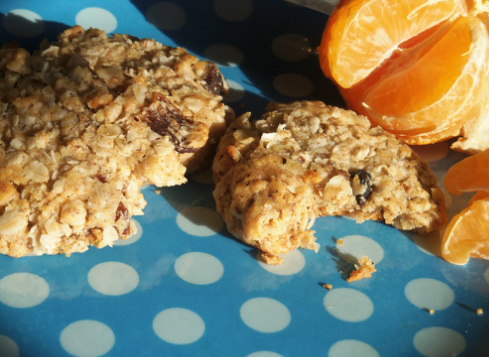
A few years ago, I opened up the Foods section of my local newspaper and spotted a recipe called "Just-the-Best Cookies". The version there was intended to be a healthier one, having reduced the nuts, coconut, and switching to oil instead of butter. Well, I've reduced the sugar and changed it to use honey, then added back the bigger amount of coconut and nuts, since we know now that healthy fats are, well, healthy! In moderation. And I love the crunch and flavor of coconut and nuts.
We have two breakfast times at my house- one for my highschoolers and husband, who have to be out the door by 6:45, and one for the rest of us, because some of them leave at 8:00 for the elementary school and Jr-High. These cookies make a fantastic, no-work breakfast for that earlier group- I make a batch, put them in a big ziplock bag after cooling, and pop them into the freezer. Then my early group can even grab and go, when needed.
These cookies are high in fiber as well, and lower in sugar than most. Two cookies are about the same nutritionally as one homemade, normal-sized muffin, and much better for you than commercially-made muffins! Two made without raisins contain 16 grams of sugar, which is less than you'd get in a bowl of cereal with milk. Especially if you count the size bowl my teenagers think is a serving. (I keep hiding the bigger bowls...)
Enjoy!
Just-the-Best Breakfast Cookies 1/2 c. coconut oil or butter 1/2 c. honey 1/2 c. brown sugar 1 large egg 1 1/2 tsp. vanilla 1/4 c. water 2 c. whole wheat flour 2 c. quick-cooking oats 1 tsp. baking soda 1/2 tsp. salt 1 c. shredded sweetened coconut 1/2 c. chopped pecans or other nuts, optional 1/2 c. chopped raisins, optional
Preheat oven to 350 degrees. Lightly grease or spray two cookie sheets. In a large bowl, beat together coconut oil and honey, then mix in egg, vanilla, and water. Add the flour, oats, baking soda, and salt and mix well. Stir in coconut, nuts, and raisins. Roll into 1 1/2" balls, a little larger than a ping-pong ball. Place on cookie sheet, flatten slightly, and bake for about 12 minutes. Let the cookies cool 2 minutes on the cookie sheet before removing to a cooling rack. Makes about 36.
To make breakfast bars instead, spread all the dough onto one well-greased cookie sheet. Bake at 350 for probably 25 minutes. I don't know for sure because the idea popped into my head just now... Cool and cut into whatever size bars you like.
This makes for a very special breakfast, one of my husband's very favorites. It's fun to serve these when I have overnight guests, or sometimes just to surprise my family. I love the flavor of fresh-ground wheat, so I usually make these using 1 cup whole wheat flour and 1 cup all-purpose flour. If you prefer a fruit filling, use 1-2 Tbsp. jam, jelly, or pie filling instead of (or in addition to!) the cream cheese. You'll need to plan ahead- mix these up in the evening (10 minutes), stick the dough in the fridge overnight, then shape, quick-rise, and bake in the morning (45-60 minutes).
Easy Danish Pastry Makes 1 dozen
1 Tbsp. or 1 pkg. instant yeast ½ c. warm water (110-120 degrees F) 2 c. flour 3 Tbsp. sugar ¼ tsp. salt ½ cup (1 stick) butter, softened ½ c. milk, buttermilk, or kefir 1 egg yolk
Cream Cheese Filling 8 oz. cream cheese 2 Tbsp. sugar or 1 Tbsp. honey ½ tsp. vanilla
Glaze 1 c. powdered sugar 1-2 Tbsp. milk
Combine yeast and warm water, let sit 5 minutes. Meanwhile, combine the flour, sugar, and salt in a large bowl. Mix the butter in, mashing as needed! Beat the egg yolk with the milk, then add them to the dry mixture. Pour the yeast mixture on top. Mix well. Cover and refrigerate dough at least 3 hours, but not more than 24.
Combine the ingredients for the filling- stir cream cheese, sugar, and vanilla until smooth.
Divide dough into two logs about 8” long; keep one in the fridge to stay cold. Sprinkle counter with flour, then put one of the logs on the flour. Sprinkle it with flour, as well. Roll to a rectangle about 8x14”, then cut into 6 strips, each 14” long. Roll each strip into a rope, then shape into a coil on a greased baking sheet. Put about 1 ½ Tbsp. of the cream cheese filling on the center of each coil. Turn the oven on to 350 F. Cover the rolls and let rise while the oven heats and you roll out the next half. After the rolls have risen for about 20 minutes, bake for 15-20 minutes or until set and golden brown on the bottoms. Mix together powdered sugar and milk for glaze, then drizzle over rolls.
Leftover pastries can be frozen on the baking sheet, then transferred to ziptop baggies for longer storage. Best frozen within 3 months (but OK after that).
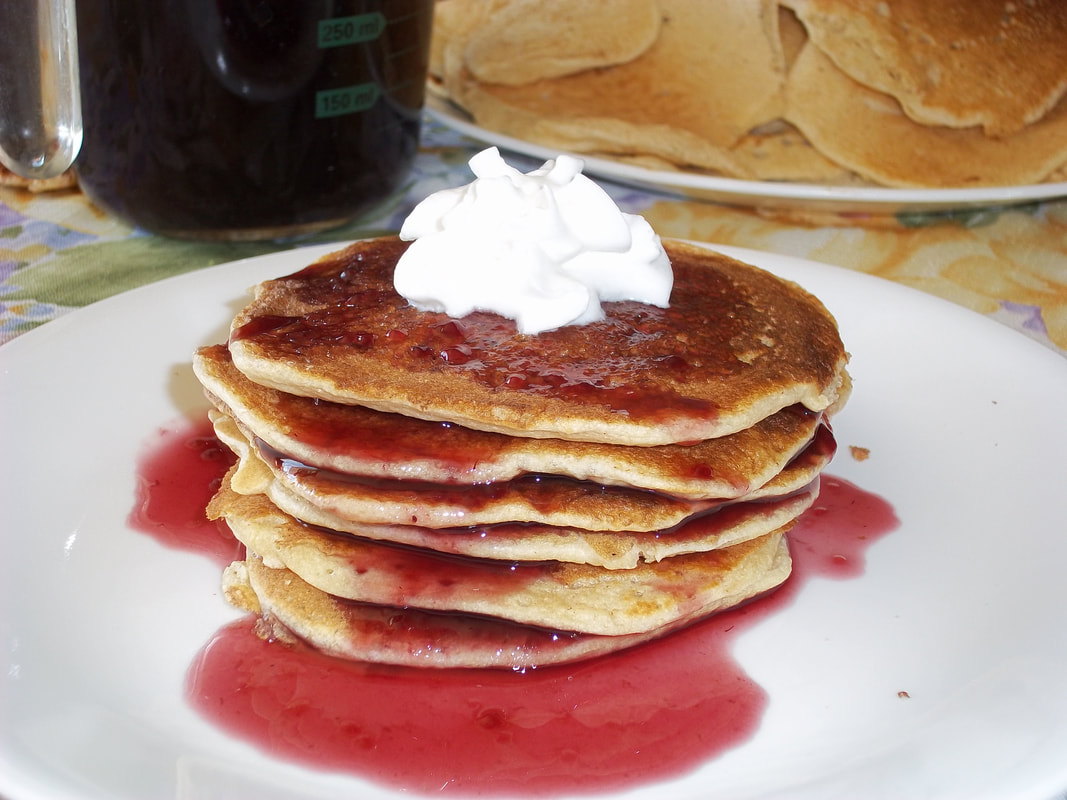
Have you ever looked at the gourmet syrups on the store shelf? Have they sounded delicious, but cost more than you're willing- or able- to spend?
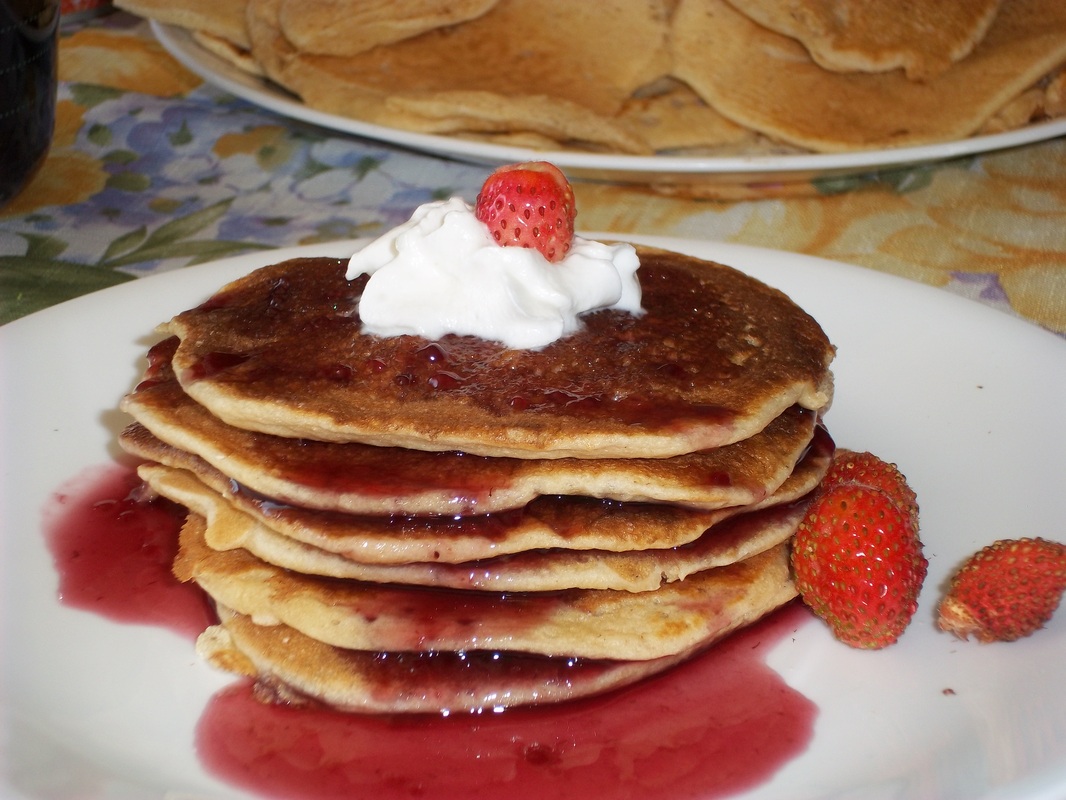
Start with one jar-- any size-- of jam, jelly, or preserves. Scoop into a bowl, then fill the now-empty jar about halfway full with water; use a little less if the jam was runny, a little more if it's very thick. Add about 1 Tbsp. lemon or lime juice for each 1-2 cups you now have, to perk up the flavor (optional but good). Whisk together until evenly mixed. Serve warm.
18 ounces of jam will yield 26-28 ounces of syrup.
You can use any kind, homemade or storebought, including the ones made with no added sugar. It's a handy way to use up jam or jelly when you've made/bought way more than y
We've tried blackberry, rhubarb, apricot, elderberry, black currant, blueberry, cherry... next maybe I'll pull out a jar of lemon-honey marmalade. That should be fantastic with blueberry pancakes!
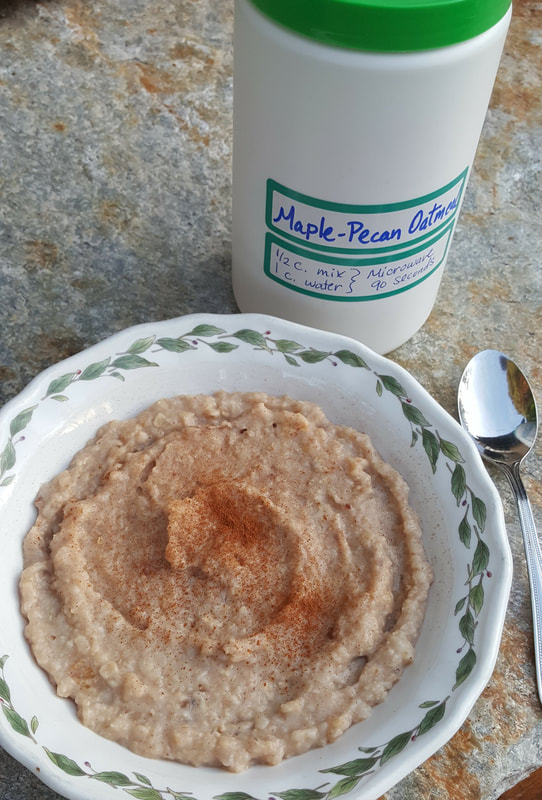
Oatmeal is a blank slate- nothing much to look at (or taste!) by itself, but it makes a great foundation! I've been learning about coconut, and have decided it doesn't deserve the bad rap it sometimes gets. Yes, it's high in fat, but it seems to be the kind of fat our body recognizes and can build with. It's also very high in fiber. If you look at coconut flour, which is defatted, ground & dried coconut, it has 6 grams of fiber in a 2 Tbsp serving (shredded coconut has 1/2 to 1/3 that amount). Oat bran has only 2 grams of fiber in 2 Tbsp. All that fiber helps reduce the glycemic load of whatever you're eating, in a major way. This fiber is also a prebiotic, meaning it encourages good intestinal probiotic growth (good bacteria in your gut, necessary to break down food and assimilate vitamins and minerals). Some people have severe allergies with tree nuts, and coconut is now classified by the FDA as a tree nut. So if you're allergic to almonds, does that mean you can't have coconut? -Most likely you'll be fine. Check with your doctor, but the few people who have been allergic to coconut are... just allergic to coconut, not other nuts. See FoodAllergy.org for more info. Here's a breakfast that is filling, with a fun flavor. Adding the macadamias gives it an especially satisfying crunch. You can double, triple, or otherwise multiply this recipe. Coconut-Lime Breakfast Oatmeal
1 c. coconut milk (water or milk is OK, too) 1/2 c. rolled oats a dash of salt (1/16 tsp.) 1 tsp. lime or lemon juice, optional 2 Tbsp. shredded coconut 2 drops lime essential oil, or 1/2 tsp. lime zest 1/4 c. macadamia nuts, optional Combine water, coconut cream concentrate, rolled oats, and the dash of salt. Bring to a boil; simmer and stir for two minutes. Remove from heat, then stir in juice, coconut, and essential oil or zest. Top with macadamia nuts. Drizzle with a little honey if you like, but I like it without. If you use macaroon (fine flake) coconut, it will disappear into the oatmeal, leaving only flavor. Using sweetened shredded coconut will both sweeten it and add a little texture. My favorite is the shaved dried coconut; it adds both flavor and crunch. Other flavor ideas:
Use pineapple, orange, or mango juice in place of part or all of the coconut milk or water. Or add fresh, frozen, canned, or dried pieces of pineapple, mango, or papaya I don't know why it is, but pineapple and macadamias go together exceptionally well. Coconut is a natural addition here.
Once you learn the whole rotating-the-pan trick, crepes are EASY. It's actually the same batter as for German Pancakes. How's that for a two-for-one? I recommend making the blueberry sauce the night before, or not trying to make it until after the crepes are done. You'll need your full attention on the crepe pans.
Crepes 3 eggs 1 c. milk 1 c. flour butter or oil for the pan Makes about 10-12 crepes, depending on size and thickness.
Put one or two skillets (6" or larger) on the stove; heat over high heat. I always use two at a time for this. Nonstick skillets are easiest to work with, since they are lightweight, and will require less- or no- butter. While they're heating, make the batter:
Bowl method: Beat the eggs with half the milk, stir in all the flour. Beat in remaining milk, until mostly smooth.
Blender or food processor method: add eggs, all of the milk, and all the flour. Process until smooth. Cook the crepes (see below). Leftovers may be stored in a bag or airtight container in the refrigerator for up to a week, or in the freezer for months (as long as they don't get freezerburn).
Blueberry Sauce
1 Tbsp. cornstarch OR 2 Tbsp. flour 1/2 c. sugar or honey 1/4 c. water 2 c. fresh or frozen blueberries, divided a pinch of salt 1-2 drops lemon or orange oil OR 1/8 tsp. lemon extract, OR 1 Tbsp. lemon juice, optional
In a microwaveable bowl or a small saucepan, stir together the cornstarch/flour and sugar or honey. Stir in the water and half of the blueberries. Bring to a boil, stirring often if you’re using the stove. Once it boils and thickens, stir again, then mix in the remaining berries. Makes about two cups. Serve warm or cold. If it's not sweet enough for you, add 1Tbsp. sugar, taste it, and repeat as needed. If you want it thicker next time, double the cornstarch.
Keep any leftover covered tightly in the refrigerator. Leftovers can be thinned with water to make a pancake syrup, added to smoothies, stirred into plain yogurt to sweeten it, used as a topping for cake or cheesecake, as a filling for tarts or pies, or stirred in to muffin batter.
Add a teaspoon of oil to the pan, or a tablespoon if it's nonstick. Pick up a skillet with one hand, tip it to one side, and pour about 2-4 tablespoons of batter into the hot pan. Quickly rotate your wrist to make the batter spread in a thin layer completely around the pan. Put it back on the stove (and pour batter into the second pan, if you're using it). When the edges curl up a little and/or turn brown, work a spatula underneath the crepe and flip it to the other side. This first side should take 30-60 seconds to cook. The second side is even faster; once it's completely set, with just a few golden spots, slide or flip it out of the pan onto a waiting plate. (see next photo)
You don't need to add butter to the pan every time, only if the crepes start sticking.
When all the batter has been cooked, cover with a clean kitchen towel to keep warm. You can fill crepes with a thin layer of something strong (like jam, lemon curd, or cream cheese), or with about 1/4" cup of any filling. Some ideas: -Bananas (sliced, whole, cooked, or raw) with a little brown sugar or caramel -Apples, sauteed or microwaved until soft- add brown sugar and cinnamon to taste -Pie filling- blueberry, apple, cherry, apricot, or whatever else -Pudding For savory crepes, use the crepes are manicotti shells, tortillas, or egg roll wrappers. Fill with anything you'd put in those. Or make a sandwich wrap with them.
Pumpkin-Orange Muffins- made using essential oils!
Recipe is at the bottom of this page. My friend's sister sells essential oils, and has had a lot of people ask how much to use if they want to cook with them. She asked if I would play around with the oils if she provided them, and come up with some guidelines and recipes. Here's the start of that. As I add more recipes, I'll add them to an indexed pdf so they're easy to access. (More on that another time.) First of all, please make sure that you're using pure oils that don't have any chemical residues or other nasty things. In other words, use Grade A/Therapeutic Grade oils, or Grade B/Food Grade oils. The label should tell you what grade it is. There are four grades, see here for more on this. Several sources say not to ever ingest essential oils, see more about why I disagree with that here. Second of all, realize this is not going to be an exact science. Several things will affect how much oil to use in a recipe: -What brand you use- some are better quality than others -How old the oil is (they lose potency over time; these are strongest when under a year old) -What the growing season was like that year for the plants -How big your bottle is- see below for an explanation -And how strong of a flavor YOU prefer! I've discovered that your bottle size makes a huge difference on the size of the drops that come out. The 15mL bottles I have require only 16 drops of oil to equal 1/8 teaspoon. The dram-sized bottles (the kind with a stopper and a little hole in the middle of it) give out teeny-tiny drops- it takes about 64 of these drops to fill 1/8 teaspoon! (Yes, I did crazy things like measure all of this....) If you're going to cook with your oils, I actually recommend putting your cooking-herb oils in this smaller size; so little is needed that the smaller drops are perfect. Oils in this category would include oregano, thyme, coriander, rosemary, lavender, and marjoram. To get a drop out, tip the bottle over the food you're adding it to, and gently rap the bottom of the bottle once. Watch closely; it's hard to see when it comes out. A little goes a LONG way! The oils I've been using are from doTERRA. Below are the general guidelines I've learned.
When your recipe calls for herbs: 1/2 tsp. dried herb leaves = 1 1/2 tsp. (1/2 Tbsp.) fresh herb = 1/4 tsp. powdered herb = 1 tiny drop essential oil 1/2 tsp. powdered herb leaves = 1 tsp. dried herb leaves = 1 Tbsp. fresh herbs= 2 tiny drops essential oil 1 tsp. powdered herb = 2 tsp. dried herb leaves = 2 Tbsp. fresh herbs = 2 tiny drops, or 1 regular-sized drop
Using citrus oils: 1 tsp. lemon extract = 1/8 tsp. lemon essential oil = 16 drops 1 Tbsp. lemon zest = 1/16 tsp. lemon essential oil = 8 drops
So if your favorite spaghetti recipe calls for 2 tsp. powdered oregano, you can use one regular-sized drop of essential oil instead, or 4 tiny drops.
The herb ratios also seem to hold true for spices like cinnamon and ginger. I especially love the flavor of cinnamon oil- it's a pure, clean flavor reminiscent of red hots. I put two tiny drops in a half-pint of cream, along with 2 Tbsp. sugar and a bit of vanilla, before whipping it- Cinnamon Whipped Cream- delicious! We had it on pumpkin pie, for breakfast. The pumpkin pie itself also used essential oils for its spices.
Pan-Fried Fish
For 1 lb. boneless fish (I used tilapia): Cut the fish into serving-sized chunks. if there are any thin ends, tuck them under. Pat dry with a paper towel, prinkle lightly with salt and pepper.
Breading: Combine on a plate: 2/3 c. flour, breadcrumbs, cornmeal, crushed potato chips, potato flakes, or whatever! (I used 1/3 c. each flour and cornmeal) 1/2 tsp. salt 1/4 tsp. pepper
Dipping mixture: combine in a wide dish: 1 egg, beaten 2 Tbsp. buttermilk, yogurt, or mayonnaise 1 Tbsp. mustard (either Dijon or regular is great) 1/4 tsp. garlic powder, or 1 tiny drop garlic essential oil 1/8 tsp. cayenne pepper 1/2 tsp. thyme, or 2 tiny drops thyme oil- I used rosemary instead 4 regular drops any citrus oil, optional (lemon, lime, orange, or grapefruit)
Heat a 12" skillet over medium-high heat. Add oil; at least 2 Tbsp. or up to 1/2 " deep, depending on how "fried" you want this. While it's heating, drop a piece of fish into the dipping mixture; turn to coat. Lift out, then put it in the breading. Flip it over with a fork to coat it, then put it in the hot oil. Repeat with other pieces until the pan is fairly full, but pieces are not crowded or touching. Fry 2-4 minutes, until bottom is dark golden brown. Flip, and cook other side until the thickest piece is opaque inside and starts to flake when poked open. Serve hot, with tartar sauce or lemon wedges.
I always have leftover breading and dipping mixture. Instead of throwing it out, I turn it into Hushpuppies: To however much breading is left, add that much fresh flour (breading is very salty!) If you now have a cup of this dry mixture, add 1 1/2 tsp. baking powder. If you have less or more flour/breading, use less or more baking powder! Add whatever dipping mixture is left. Add water if you need, to be able to get a soft dough that more or less holds its shape. Drop by spoonfuls into the hot oil. Fry until golden ( a couple minutes), turning them over once.
Pumpkin-Orange Muffins- makes 12 2 c. flour (I used whole wheat) 1/2 tsp. baking soda 1 1/2 tsp. baking powder 1/2 tsp. salt 1 tsp. cinnamon, or 1 regular-sized drop cinnamon essential oil 3/4 c. sugar (or 1/2 c. honey) 1 c. buttermilk or sour milk 8-16 drops orange essential oil (1/16 to 1/8 tsp.)- this is distinctly orange-flavored! 1 c. pumpkin puree 1 beaten egg 1/4 c. oil or melted butter 1/2 c. chopped pecans, optional
Preheat oven to 375 degrees. Grease 12 muffin cups, or line them with cupcake papers. Mix together the dry ingredients: flour, baking soda, baking powder, salt, cinnamon, and sugar. Add the wet ingredients all at once: buttermilk, orange oil, pumpkin, egg, and oil. Stir just until combined. Spoon into muffin tins, then sprinkle with the nuts. Bake about 16-18 minutes, or until lightly golden and the top of a muffin springs back when touched.
Do you ever wish you could have cinnamon rolls in the morning without having to get up two hours early? Do you ever wish you could have dinner rolls ready to bake when you walk in the door from church or work?
With this recipe, you can. No pop-open refrigerated dough cans required. You get fresh, hot, delicious bread with all normal, easy-to-pronounce ingredients. (Do I sense a Christmas tradition in the making?)
The technique might work with other bread/roll recipes; I haven't experimented to find out yet. (Please let me know if you do!)
The recipe is from a 1987 Fleishman Yeast bread recipe booklet and tweaked only slightly. One chapter in the booklet was called "Rising On Ice"; hence the name, below. The dinner roll dough is soft, tender, springy, with a tender crumb. You can make any shape of rolls with it, including cinnamon rolls! If you make dinner rolls, remember that you can sprinkle them with herbs, sesame seeds, poppyseed, or sea salt. These could even be made into can't-be-beat hamburger buns! (Roll 1/2" thick, cut 3-4" circles with a biscuit cutter or canning ring.) This makes about 2 1/2 dozen rolls, or one 14x18" baking sheet full of cinnamon rolls. Rising On Ice Dinner Rolls 1 cup milk 2/3 c. water 1/4 c. (1/2 stick) butter 6-7 cups flour 1/2 c. sugar 1 1/2 tsp. salt 2 packages active dry yeast (or 3-4 tsp. instant yeast) 2 eggs, at room temperature Combine milk, water, and butter; heat to 120-130 degrees (butter doesn't need to melt). Meanwhile, put 2 cups of the flour, the sugar, salt, and yeast in a large bowl. Add the warm milk mixture, then beat two minutes on high speed. Add eggs and 3/4 c. more flour; beat two more minutes on high. Add more flour to make a fairly stiff dough; knead 8-10 minutes, until smooth. Cover and let rest for 20 minutes. Punch down, shape into whatever shape rolls you want. Place them on a greased baking sheet. Brush them with oil (this helps them not dry out in the fridge, as well as to not let the plastic stick), then cover them loosely with plastic wrap. Refrigerate for 2-24 hours. When ready to bake, pull them out of the fridge, carefully uncover them, and let them sit at room temperature while the oven heats. Bake at 375 degrees for 15-20 minutes or until done. For instructions to make cinnamon rolls, see the Making Bread page and scroll about halfway down.
These make great little gifts. I gave these out during the holidays, when most people are short on time and have had enough 'goodie plates'. If you want to give them something extra, also include a bottle of syrup (homemade or storebought) or a couple different mixes in a basket. Back on 10/27/2010 I wrote a post on making vegetable powders. Here's one kind you can make- pumpkin powder! The recipe below uses it to make some fragrant, fresh pancakes. You can also adapt any recipe that calls for pumpkin puree. I've made pumpkin pie with the powder, and it turns out great. 1/3 cup pumpkin powder plus enough water to give you one cup is all it takes to make a cup of pumpkin puree. Most recipes won't require rehydrating the pumpkin first, either. Just mix everything together, and the powder will rehydrate while it cooks. This mix is just a really large batch of " Foolproof Pancakes" (also from the 10/27/2010 post), made so you only need to add eggs and water. Pumpkin Pancake Mix½ cup coconut oil (shortening works too, but I don't use it) 1 ¼ c. brown sugar or raw cane sugar¼ c. cinnamon1 ½ c. pumpkin powder3 c. powdered milk1/4 c. baking soda¼ c. salt13 c. flour ( ½ wheat, ½ white)Mix together the coconut oil, brown sugar, and cinnamon. Stir in everything else. Store in a container with a tight-fitting lid. Makes about 20 cups.To use it, combine 1 1/3 c. mix, 1 egg, 1 cup water. You'll get about 15 batches this size from the whole mix.I made up a smaller bag with 2 2/3 c. mix, which is 12 ounces if you like to weigh things. The instructions to use the whole bag is to add 2 eggs and 2 cups of water.My bigger bag has 4 cups mix, about 17 ounces, and mixes with 3 eggs and 3 cups water. For a ready-made label, click here. * * * * * The amount of pumpkin is based on using roughly 1/2 cup of pumpkin puree for a 1-cup-of-flour batch of pancakes. So if you don't have pumpkin powder, omit that ingredient, use just under 1 1/4 cups of mix, 1 egg, 1/2 cup fresh pumpkin puree, and reduce water. To make pumpkin powder, first wash (but don't peel) the outside of a pumpkin. Scoop out the seeds. The seeds are great themselves. I find them easiest to separate from the stringy fibers by putting them in a bowl of water. Pinch the seeds off into the water. Dry them for a couple weeks and save them for planting in next year's garden, or roast them with a little oil and salt. Trim off the stem and the blossom end. Slice the pumpkin lengthwise into pieces about 2" wide. If you steam them now, the pumpkin will dehydrate in about half the time, and have a mellower, sweeter flavor. Let cool enough to handle, then cut them about 1/4- 3/8" thick crosswise. Lay the thin pieces in a single layer on a dehydrator try, or on a windowscreen laid down in a hot car, or on a cookie sheet with the oven on lowest setting... whatever you have. This 5-lb pumpkin dehydrated down to just under 7 ounces, which measured 1 1/2 cups. Not a bad space saver! It takes just 3 Tbsp of this powder to equal 1 cup of puree, after adding water. Try Pumpkin Shake! A rainbow of dehydrated vegetables: from left to right: tomato powder, pumpkin powder, yellow squash powder, and dried & crumbled greens.
(originally from 6/17/10) QUOTE OF THE DAY: Ezra Taft Benson "There are blessings in being close to the soil, in raising your own food, even if it is only a garden in your yard and a fruit tree or two. Those families will be fortunate who, in the last days, have an adequate supply of food because of their foresight and ability to produce their own" (The Teachings of Ezra Taft Benson, p. 266).
In Google Docs there is a file with the recipes I made for the basic-foods class today; Using Wheat Without A Mill. It covers different ways to use your wheat (all without a mill- a grinder-), including sprouting it, cooking it whole or cracked, how to crack it in the first place, blender-wheat recipes (including a chart to help you convert your own recipes to use whole wheat with the blender), making malt, and soaking wheat before using it. The last page also has links to some great recipes and resources for using your wheat. These links are also listed below. Please buy wheat! You cannot beat it for price. You can buy it by the bag at the cannery, you don’t have to get it in the cans. White wheat there is $5.80 for a 25 lb bag, which is about 23 cents per POUND, which is enough to make one whole loaf of bread. You pay that much, or more, for each OUNCE of breakfast cereal. If you don't have a grain mill (grinder), or don't know yet how to use wheat if it's not already flour, now is a great time to jump in and get some wheat anyway. If you're worried that you won't be able to rotate/use it before it goes bad, don't let that stop you from following the commandment to build your food storage. It lasts for a long, long time. Decades or more, if stored right. Get it, then learn how to use it. It's healthy stuff to have on hand anyway! It’s also inexpensive insurance. You'll be glad you have it, and I know you’ll be blessed for following the prophet's counsel.-RhondaNotes from what we tasted and learned at the class-:We sampled Blender Wheat Pancakes, Wheat Puree Bread, Wheat Salad with Chicken and Corn, Strawberry Nut Jello Salad (the 'nuts' are wheat), Gourmet Banana Nut Cookies, cooked wheat, cracked wheat, sprouted wheat, malt powder . Also covered was the difference between COOKED and SPROUTED wheat, and how to make malt. Why eat it: it's CHEAP, stores a LONG time, high in fiber, high in some proteins, vitamins, minerals. (summary of the class): How to eat it: Grind in blender (2 cups for 1 ½ minutes) or food processor (the dry grains or soaked/cooked), crack in blender, cook whole or cracked, sprout and eat as kernels (as breakfast cereal, or ground beef extender, or rice/pasta/nut substitute), make malt, or sprout and eat as wheat grass or wheat grass juice.Ways to cook wheat: in a Thermos, rice cooker, crock pot, regular pan, use in breads (quick/yeast), cakes, salads, (including Jello). You may cook them then freeze for later. Why soak grains before eating them- phytates (phytic acid, the form the phosphorus is in) are anti-nutrients, they bind with and so block absorption of minerals, especially zinc, that you need for proper growth and immune system strength. You inactivate phytates by making the grain think it’s sprouting- warm, moist. Also, soaking freshly ground grain in warm liquid also destroys the phytic acid by activating the enzyme phytase. A diet rich in Vitamins D, C, A, and calcium help mitigate the effect of phytic acid on the body. Sprouted wheat is a vegetable, does not lose gluten, but the amino acid profile and vitamins change and it becomes more easily digestible. Wheat Berries2 cups hard red winter-wheat berries 7 cups cold water 1 teaspoon saltPlace wheat berries in a large heavy saucepan. Add water and salt. Bring to a boil over high heat, then reduce heat, cover, and simmer gently for 1 hour, stirring occasionally. Drain and rinse. To serve hot, use immediately. Otherwise, follow the make-ahead instructions. Makes about 4 1/2 cups. MAKE AHEAD TIP: Cover and refrigerate or freeze. For Cracked Wheat, put ¼ to ½ cup of uncooked wheat in a blender, run for 30 seconds or til cracked.
NUTRITION INFORMATION: Per 1/2 cup: 151 calories; 1 g fat (0 g sat, 0 g mono); 0 mg cholesterol; 29 g carbohydrate; 6 g protein; 4 g fiber; 263 mg sodium; 0 mg potassium. 2 Carbohydrate Servings Exchanges: 2 Starch
Ready-made toppings for your cooked wheat: Applesauce Pure fruit spreads Fruit butters, such as apple, apricot, prune, pear Marmalades, jams, preserves, conserves Frozen berries and fruits, with or without syrup Nut butters- peanut, almond, cashew Lemon and lime curds Maple syrup Pure honey, whipped, unfiltered or in unusual flavors such as sage, lavender, or chestnut Chocolate-hazelnut and chocolate peanut butter spreads Sundae toppings
Making malt: http://www.dryit.com/diastaticmalt.html
Put 1 cup of wheat kernels in a quart jar, cover with water, and let soak for about 12 hours. Drain the water (which has vitamins and minerals- save for broth, watering plants, or making bread), rinse, and drain completely. Rinse and drain 1-3 times a day for 2 days, until the sprouted part is about the same length as the grain. Spread on cookie sheets to go in the sunshine or warm oven or in a dehydrator; dry thoroughly but don’t heat over 130 degrees, so you don’t kill the enzymes. Grind in a mill or in your blender. Makes about one cup. Store tightly covered. This will keep indefinitely in the fridge or freezer. Use about 1-1 ½ teaspoon (1/10 of 1% flour) per loaf of bread. More than this will give you sticky dough and is not beneficial.
The enzyme in malt (diastase) converts starch in the dough to sugars (maltose) that the yeast can use; longer fermentation (rising) times are needed to be most effective. Malt replaces sugar/honey and feeds the yeast, browns the crust. It also has lots of enzymes and vitamins, and so makes your bread more digestible and more nutritious. The enzymes also improve the flavor, make a finer texture, and increase shelf life. If you wanted to make malt syrup, you would slowly cook the sprouted grain to get a dark syrup.
Also see: http://makinghomemadewineandbeer.blogspot.com/2008/05/making-malt-extract.html
Links:
http://everydayfoodstorage.net/training-cooking/grains, http://everydayfoodstorage.net/2008/10/12/pumpkin-blender-wheat-waffles-with-caramel-sauce/food-storage-recipes Pumpkin Blender Wheat Waffles with Caramel Sauce, http://everydayfoodstorage.net/category/long-term-food-storage/grains/wheat/blender-wheat Red, White and Blue Blender Pancakes (blender pancakes with red and blue berries, whipped cream), http://everydayfoodstorage.net/2008/04/01/food-storage-gourmet-blender-wheat-cookie/food-storage-recipes Gourmet Blender Banana Wheat Cookie, http://everydayfoodstorage.net/2008/06/24/bring-one-of-these-one-of-a-kind-salads-to-your-next-gathering/food-storage-recipes Feta Wheat Berry Salad, Wheat Berry Salad with Apples and Cashews
http://selfreliantsisters.blogspot.com/search/label/Wheat%20Berries Black Bean, Edamame, and Wheat Berry Salad, Crockpot Wheat Berries, Stovetop Wheat Berries, Pressure Cooker Wheat Berries, Carroll Shelby’s Chili, Wheat Berry Pineapple Chicken Salad, Wheat Berry Salad, Wheat Nuts (like Corn Nuts); http://selfreliantsisters.blogspot.com/2010/02/4-blender-pancake-recipes.html 4 different blender pancake recipes to try
http://www.foodnetwork.com/search/delegate.do?fnSearchString=wheat+berry&fnSearchType=site Wheat Berry Tapenade, Mushroom Wheat Berry Pilaf, Cumin-Scented Wheat Berry-Lentil Soup, Zesty Wheat Berry-Black Bean Chili, Rice, Red Lentil, and Wheat Berry Salad, Wheat Berries and Greens (Farro e Verdure)
http://www.foodnetwork.com/search/delegate.do?fnSearchString=wheat+berry&fnSearchType=site Easter Wheat Pie (Pastiera di Grano); the same type recipe baked in a springform pan to be a cake is as http://www.celtnet.org.uk/recipes/miscellaneous/fetch-recipe.php?rid=misc-la-pastiera-di-grano
http://www.ldspreparedness.com/Files/cookbook.pdf The “New Ideas For Cooking with Food Storage” cookbook (20 pages). Meat substitutes and extenders, Bulgur Wheat, another Blender Wheat Pancake recipe with variation for Waffles, Chinese Fried Wheat (instead of rice), Italian Fried Wheat, Spanish Fried Wheat, Cracked Wheat Casserole (includes burger too), Popped Wheat (similar to Corn Nuts), how to cook it: stovetop, Thermos, gas range’s pilot light, crockpot, as cracked wheat.
http://www.suegregg.com/ for whole foods, including lots of blender wheat recipes
|